The short answer
Truck accident claims in California involve federal FMCSA regulations, multiple liable parties (driver, trucking company, cargo loader), and high policy limits. You generally have two years to sue (CCP § 335.1), but trucking logs and black-box data are destroyed quickly. Preserve evidence immediately and consult a lawyer right away.
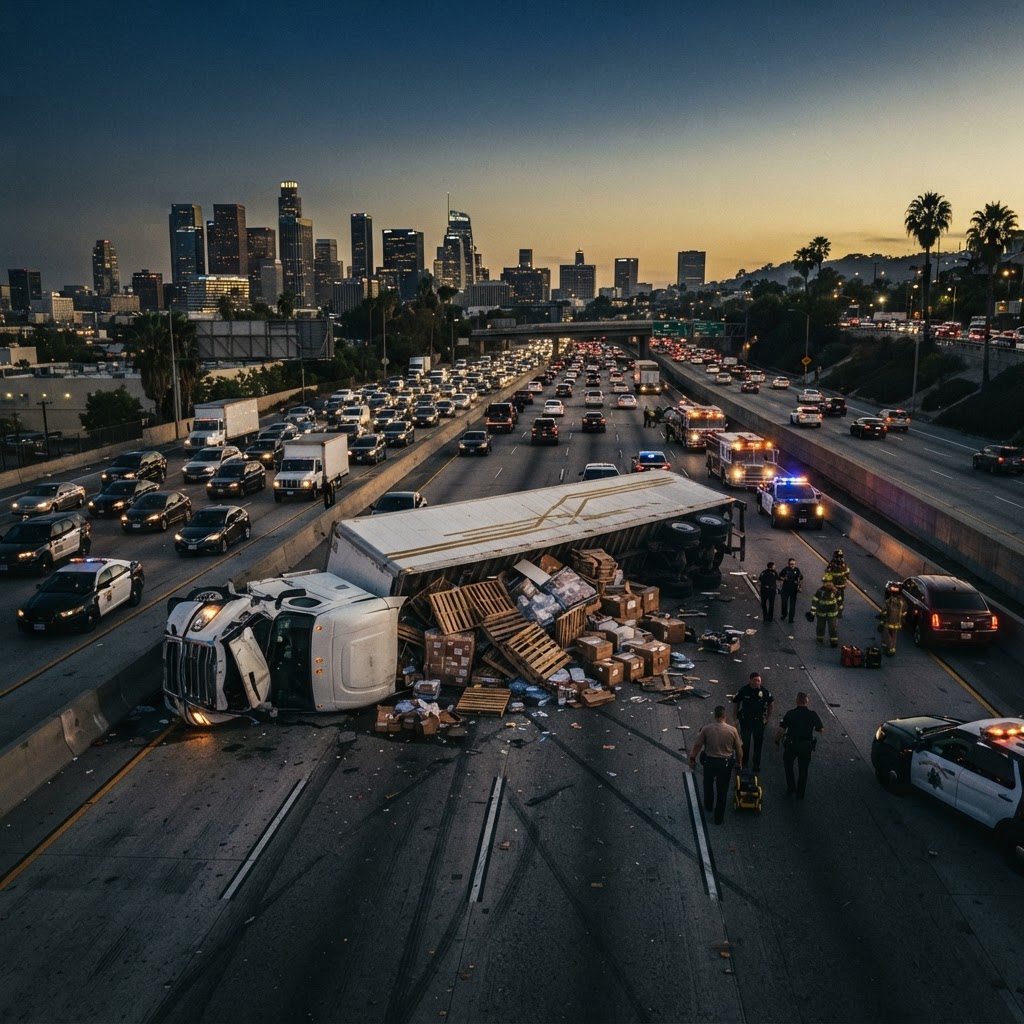
A collision with a big rig, delivery truck, or tanker is different from an ordinary car crash. The weight difference alone means the injuries are often catastrophic. Los Angeles sees heavy truck traffic every day, much of it moving freight from the Ports of Los Angeles and Long Beach up the 710, across the 60 and the 91, and north on the 5 through the Grapevine. Add warehouse traffic in the Inland Empire corridor and last-mile delivery vans on city streets, and truck crashes are a regular part of life here.
Trucking claims are also more complex. Responsibility can extend beyond the driver to the motor carrier, the company that owns the trailer, the broker, the shipper or loader, and the maintenance provider. Federal safety rules under the Federal Motor Carrier Safety Administration govern hours of service, driver qualification, inspections, and cargo securement. Violations of those rules can be powerful evidence, but only if the records are secured before they are lost or discarded.
Our founding attorneys spent years on the fight against insurers, and we know how commercial carriers respond to a serious crash. Many have rapid-response teams, adjusters, and lawyers working to shape the story before the injured person is out of the hospital. We counter by sending preservation demands immediately, pursuing electronic logging and engine data, and identifying every insurer with potential exposure.
Your consultation is free, and you pay no attorney's fee unless we recover compensation for you. If you or someone you love was hurt in a truck crash in Los Angeles County, contact us as early as possible so critical evidence can be preserved.
From the other side of the table
How the trucking insurer sees your claim
The rapid-response investigation
Carriers often dispatch investigators and defense counsel to the scene quickly. We move just as fast, sending spoliation letters and requesting the truck, its data, and its records before anything is altered or destroyed.
Blaming the passenger vehicle
Defense teams frequently argue that the car cut into the truck's stopping distance or lingered in a blind spot. We use video, electronic data, and reconstruction analysis to show what the truck driver actually did.
Hiding behind the corporate structure
Trucking operations are often split across separate entities for the tractor, trailer, driver, and brokerage. We trace the relationships to find each party with responsibility and insurance.
Minimizing the compliance picture
Insurers prefer to treat a crash as a single driver error. We review hours-of-service logs, driver qualification files, drug and alcohol testing, and maintenance records to see whether the company's practices set the stage for the crash.
Why it happens
Common causes
Driver fatigue and hours-of-service violations
Pressure to meet delivery windows can lead drivers to push past federal driving limits, especially on long hauls coming into LA on the 5 and the 15.
Unsafe lane changes and blind spots
Large trucks have significant blind spots on all sides. Lane changes on crowded freeways like the 405 and the 710 can crush a passenger car that the driver never checked for.
Wide right turns
Trucks making right turns on city streets swing wide and can trap cars, cyclists, and pedestrians, particularly in industrial areas like Vernon, Commerce, and Wilmington.
Improperly secured or overweight cargo
Shifting loads can cause rollovers and jackknifes, and spilled cargo creates hazards for following traffic.
Brake and equipment failures
Poor maintenance of brakes, tires, and lights can make a truck unable to stop in time, especially on downgrades such as the Grapevine and the Newhall Pass.
Speeding and following too closely
A loaded truck needs far more distance to stop than a car. Speeding or tailgating in traffic can lead to devastating rear-end collisions.
What we see
Injuries we handle
What you may recover
Compensation in a California claim
Lifetime medical care
Hospitalization, surgery, rehabilitation, prosthetics, home modifications, and long-term care for catastrophic injuries, supported where appropriate by life care planning.
Lost earnings and earning capacity
Past wages and the reduced ability to earn over a lifetime when injuries prevent a return to your prior work.
Pain, suffering, and loss of enjoyment of life
The physical pain, emotional trauma, and life changes that follow a serious truck crash.
Wrongful death damages
For families who lose a loved one, compensation for lost financial support, companionship, guidance, and funeral expenses.
Punitive damages when warranted
If a company knowingly allowed an unsafe driver or vehicle on the road, punitive damages may be available in appropriate cases.
The rules that apply
California law you should know
Federal motor carrier safety rules
Interstate motor carriers and drivers must follow FMCSA regulations covering driver qualifications, vehicle inspection and maintenance, cargo securement, and more.
49 CFR Parts 390-399
Hours-of-service limits
Federal rules limit how long commercial drivers may drive and be on duty and require records of duty status, typically through electronic logging devices.
49 CFR Part 395
Pure comparative fault
Even if the trucking company argues you share some blame, you can still recover damages reduced by your percentage of fault.
Li v. Yellow Cab Co. (1975) 13 Cal.3d 804
Two-year injury deadline
Truck accident injury lawsuits generally must be filed within two years, but critical evidence can disappear much sooner.
Code of Civil Procedure § 335.1
General information, not legal advice. Deadlines and rules depend on the facts of your case, so talk to an attorney promptly.
Right now
Protect your claim
Evidence to gather
- The truck's USDOT number, company name, and trailer information
- Photos of the truck, trailer, cargo, and all vehicles involved
- Electronic logging device and engine control module data
- Dashcam and forward-facing camera footage from the truck
- Driver qualification, training, and drug and alcohol testing records
- Maintenance and inspection records for the tractor and trailer
- Bills of lading and dispatch records
- Witness names and the police or CHP report
Mistakes insurers count on
- Speaking with the trucking company's investigator or insurer before getting legal advice
- Assuming the driver's employer is the only responsible party
- Waiting weeks to request preservation of electronic data
- Accepting an early settlement before the full extent of injuries is known
- Overlooking the long-term cost of care in a catastrophic injury case
Step by step
How we handle your case
- 1
Immediate preservation demands
We send letters to the carrier and related companies demanding they preserve the truck, electronic logging device data, engine control module data, dashcam footage, and driver files.
- 2
Identify every responsible party
We determine who employed the driver, who owned the tractor and trailer, who loaded the cargo, and who maintained the equipment.
- 3
Federal compliance review
We examine hours-of-service records, driver qualification files, inspection reports, and drug and alcohol testing records under FMCSA rules.
- 4
Build the damages case
We work with your medical providers and, where appropriate, economists and life care planners to document the full long-term cost of your injuries.
- 5
Pursue resolution or trial
We negotiate with commercial insurers and file suit when necessary, preparing the case to be presented in court.
From the Case Vault
Related results
Past results do not guarantee a similar outcome. Every case is different and must be evaluated on its own facts.
Straight answers
Frequently asked questions
Truck cases usually involve more parties, more insurance, and more regulations. Commercial trucks are subject to federal safety rules on driver hours, inspections, and cargo, and violations can support your claim. Multiple companies may share responsibility. Injuries also tend to be more severe, which means the long-term cost of care must be carefully documented. The defense is often better funded and moves faster.
Vehicle Accidents