The short answer
E-scooter accident victims in California can recover compensation from a negligent driver, the scooter company for defective equipment, or a property owner for hazardous conditions. You generally have two years to file (CCP § 335.1). Preserve evidence and consult a lawyer before accepting any settlement.
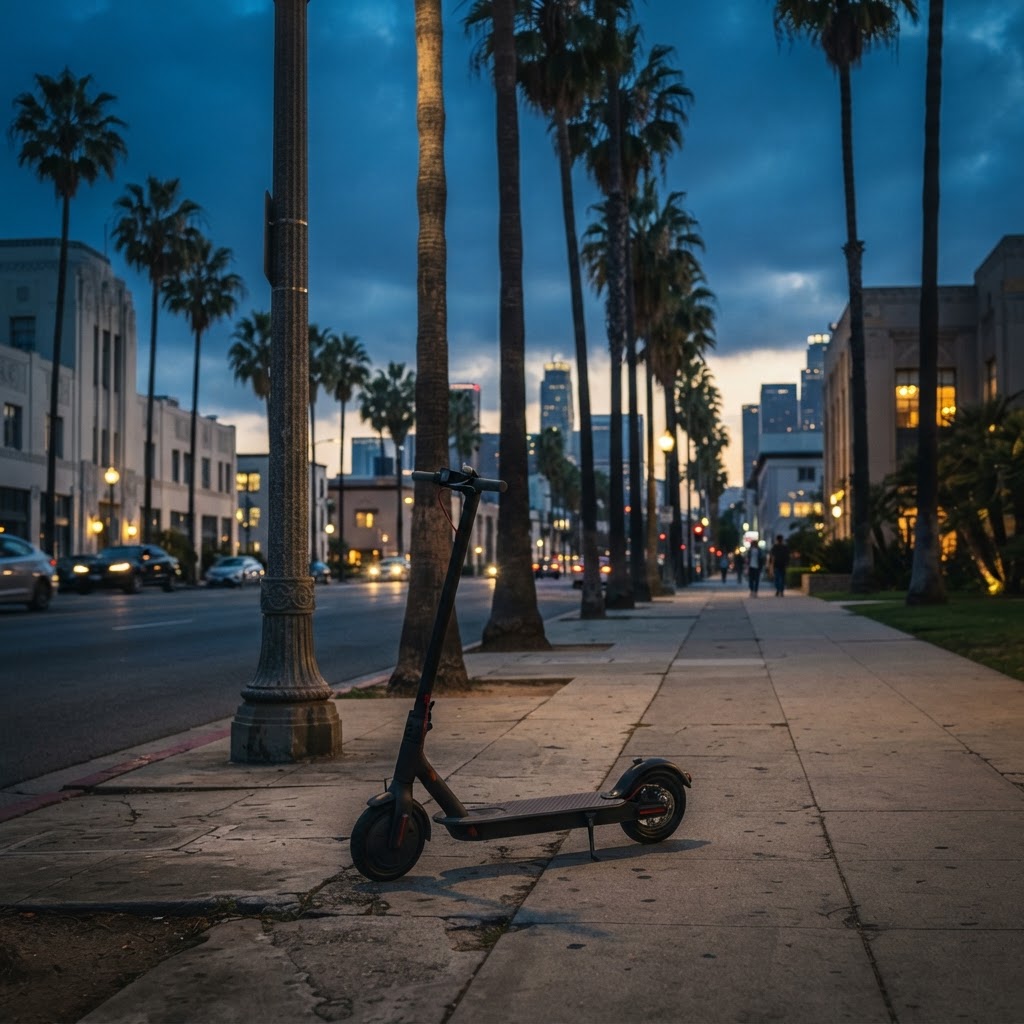
Rental e-scooters from Lime, Bird, and similar apps line the sidewalks from Santa Monica to Downtown Los Angeles, and privately owned scooters now share bike lanes on Venice Boulevard, Sunset, and Figueroa. A standing rider has no frame, no airbag, and very little time to react when a driver opens a door into the lane or turns right across it. When something goes wrong, the injuries tend to be sudden and serious: wrist and elbow fractures from bracing the fall, facial injuries, and head trauma that may not show symptoms until hours later.
Scooter claims are rarely simple. The person or company responsible could be a driver who never looked, the rental company whose scooter had a failing brake or throttle, the manufacturer of a defective battery or stem, or a city agency that left a crumbling curb cut or pothole in the path of travel. Each of those defendants has its own insurer, its own adjuster, and its own reasons to blame you. Rental apps also push riders to accept terms of service that the companies may later try to use against a claim.
Our founding attorney has fought insurers for injured Californians since 2002. We know the checklist an adjuster runs when a scooter rider is hurt: helmet, sidewalk riding, speed, headphones, intoxication, prior injuries. We build your file to answer those questions before they are asked, so the conversation stays focused on what the driver or company did wrong and what your injuries have cost you.
Consultations are free, and you pay no attorney's fee unless we recover compensation for you. If you were hurt on a scooter anywhere in Los Angeles County, talk with us before you give a recorded statement to anyone's insurance company.
From the other side of the table
How the insurer's adjuster sees your scooter claim
The 'reckless rider' narrative
Adjusters are trained to open a scooter file by looking for rider fault: riding on the sidewalk, weaving, riding two-up, or running a light. Under California's pure comparative fault system, every percentage point they assign to you reduces your recovery. We counter by locking down traffic camera footage, business surveillance, ride data from the app, and witness statements early, before the story hardens against you.
The helmet argument
Insurers routinely argue that an adult rider who skipped a helmet caused their own head injury. California's scooter helmet requirement applies to riders under 18, and a missing helmet has nothing to do with who caused the crash. We push back with medical evidence about how the injury actually occurred and whether a helmet would have changed it.
The terms-of-service shield
Rental companies may point to the waiver and arbitration language in the app you tapped through. Those clauses are not always enforceable, particularly where a company is accused of gross negligence or of putting a poorly maintained device on the street. We review the agreement, preserve the scooter's maintenance and ride history, and identify every party whose conduct is not covered by that agreement at all, such as the driver.
Minimizing 'minor' injuries
Because scooters are small, adjusters assume the injuries must be small too. A wrist fracture that needs surgery or a concussion that affects your ability to work is not minor. We document your treatment, your work limitations, and the ongoing effects with your providers so the valuation reflects the injury, not the size of the vehicle.
Why it happens
Common causes
Right-hook and left-turn collisions
Drivers turning right across a bike lane on streets like Venice Boulevard or turning left at busy intersections in Koreatown often fail to see a scooter traveling straight through. These crashes frequently involve a driver who says the rider 'came out of nowhere.'
Dooring in the bike lane
Parked drivers along corridors like Abbot Kinney, Sunset Boulevard in Silver Lake, and Downtown streets open doors directly into scooter riders. California law requires drivers to check before opening a door into moving traffic.
Defective or poorly maintained rental scooters
Worn brakes, loose stems, faulty throttles, and failing batteries can cause sudden loss of control. Rental fleets are used heavily and maintained on a schedule that does not always keep up with wear.
Potholes, broken pavement, and road hazards
Small wheels make scooters vulnerable to cracked asphalt, raised utility covers, and uneven curb ramps. When a public entity knew or should have known about the hazard, a claim may lie against the city or county, subject to strict claim deadlines.
Hit-and-run drivers
Some drivers leave after striking a scooter rider. Your own auto policy's uninsured motorist coverage may still apply, and we work to identify the driver through cameras and witnesses.
Rideshare and delivery vehicles
Rideshare pickups and delivery drivers stopping in bike lanes near busy areas like Hollywood and the Arts District force scooter riders into traffic or cause sudden collisions.
What we see
Injuries we handle
What you may recover
Compensation in a California claim
Medical expenses
Emergency care, imaging, surgery, physical therapy, and future treatment your doctors reasonably expect you will need because of the crash.
Lost income and earning capacity
Wages lost while you recover, plus reduced earning capacity if a hand, wrist, or cognitive injury limits the work you can do going forward.
Pain and suffering
Compensation for physical pain, anxiety about riding or even crossing the street, sleep disruption, and loss of enjoyment of daily life.
Scarring and disfigurement
Facial injuries and road rash can leave visible scars. California law allows recovery for the lasting physical and emotional effects of disfigurement.
Property damage
Replacement or repair of a privately owned scooter, helmet, phone, clothing, and other personal property damaged in the collision.
The rules that apply
California law you should know
Two-year statute of limitations
Most personal injury lawsuits in California must be filed within two years of the injury. Waiting also risks losing video and ride data that can disappear within days.
Cal. Code Civ. Proc. § 335.1
Motorized scooter operating rules
California sets specific rules for motorized scooters, including a valid driver's license or permit, helmet use for riders under 18, and restrictions on sidewalk riding. An insurer may try to use a rule violation against you, but a violation does not automatically bar recovery.
Cal. Veh. Code § 21235
Pure comparative fault
Even if you were partly at fault, you can still recover. Your compensation is reduced by your percentage of fault rather than eliminated.
Li v. Yellow Cab Co. (1975) 13 Cal.3d 804
Claims against public entities
If a dangerous road condition owned by a city or county caused your crash, a written government claim generally must be presented within six months, well before the regular two-year deadline.
Cal. Gov. Code §§ 835, 911.2
General information, not legal advice. Deadlines and rules depend on the facts of your case, so talk to an attorney promptly.
Right now
Protect your claim
Evidence to gather
- Screenshots of your ride receipt, start and end times, and scooter ID number from the app
- Photos of the scooter, the vehicle, the road surface, and the intersection
- The name, insurance, and plate number of any driver involved
- Names and phone numbers of witnesses
- Locations of nearby business cameras, traffic cameras, and doorbell cameras
- Your helmet, clothing, and shoes, unwashed and unrepaired
- The police report number or incident number
- Medical records and a daily journal of symptoms and missed work
Mistakes insurers count on
- Giving a recorded statement to the driver's insurer or the rental company before speaking with a lawyer
- Letting the rental company collect the scooter without documenting its condition first
- Posting about the crash, your injuries, or your recovery on social media
- Waiting to see a doctor because you feel 'mostly fine' after the fall
- Missing the six-month deadline when a city pothole or road defect was involved
Step by step
How we handle your case
- 1
Free case review
We listen to what happened, review any photos or reports you have, and explain who may be responsible and what deadlines apply, including shorter deadlines if a public entity is involved.
- 2
Preserve the digital evidence
We send preservation letters to the rental company for ride data and maintenance history, and to nearby businesses and agencies for video before it is overwritten.
- 3
Identify every source of coverage
We look at the driver's liability policy, your own uninsured and underinsured motorist coverage, the rental company's insurance, and any public entity or manufacturer that may share responsibility.
- 4
Document your injuries
We coordinate records from your treating providers and track your lost time from work so your demand reflects the full effect of the injury.
- 5
Negotiate or litigate
We present the claim the way we know adjusters evaluate it. If the insurer will not make a fair offer, we are prepared to file suit and take the case forward.
From the Case Vault
Related results
Past results do not guarantee a similar outcome. Every case is different and must be evaluated on its own facts.
Straight answers
Frequently asked questions
Possibly. If a rental scooter had a mechanical defect or was not properly maintained, the company may bear responsibility. The app's terms of service often include waiver and arbitration language, but those provisions have limits and do not protect other parties, such as a driver who hit you. We review the agreement and the scooter's history to determine whether a claim against the company is viable alongside claims against others.
Vehicle Accidents